
Flour processing may look like just "grinding wheat into flour," but a mill that stably produces first-grade flour sits behind an interlocking process chain. In our delivered processing projects in Brazil, India, and Southeast Asia, we've repeatedly verified: the success or failure of a milling system often doesn't depend on how advanced a single roller mill is, but on the integration quality of the entire line.
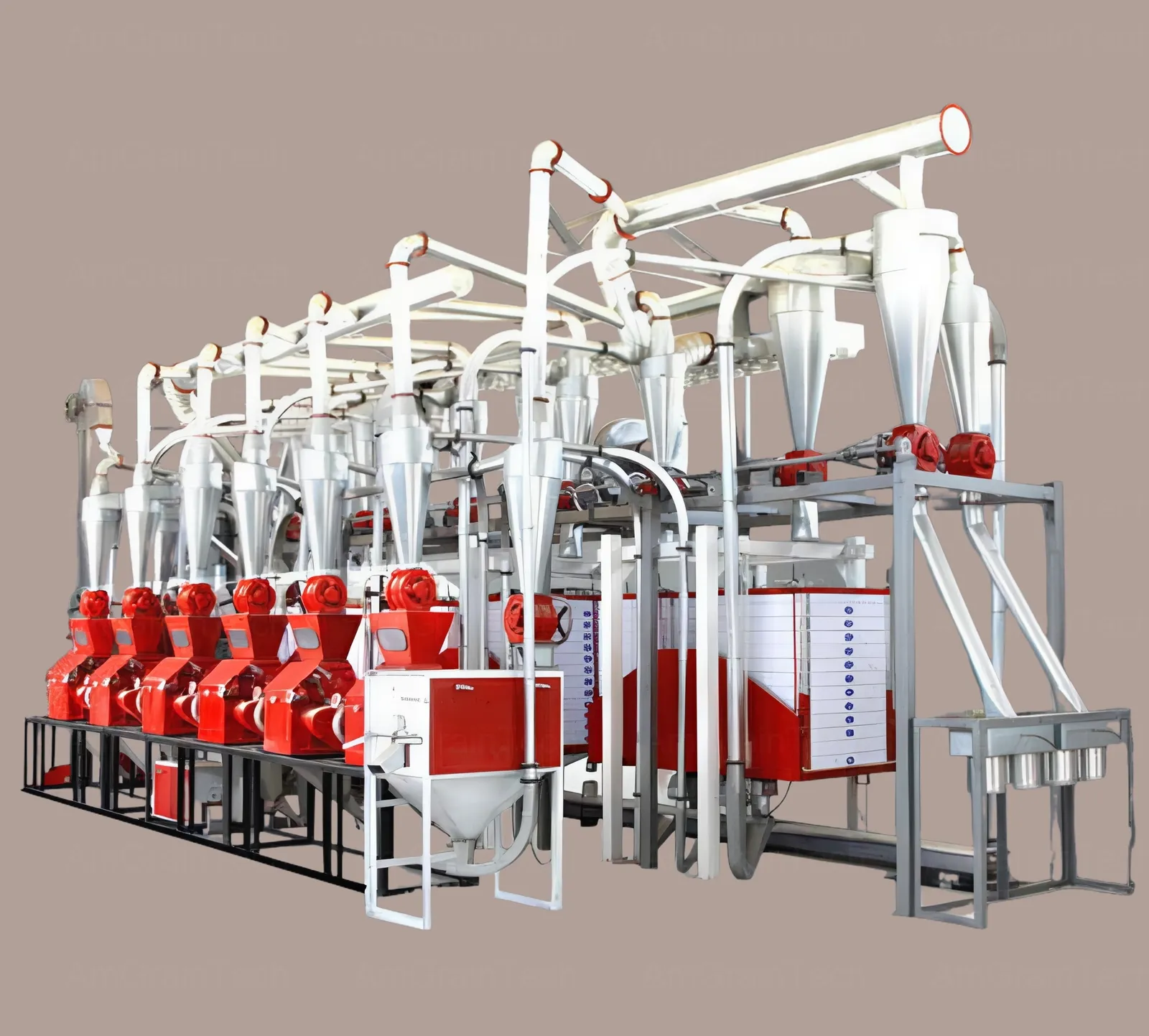
1. Standard Process Route
A typical flour processing line includes: raw grain receiving → pre-cleaning → destoning → tempering (conditioning) → grinding (multiple passes) → sifting (plansifter) → blending → packaging. The output of each step is the "raw material" for the next; any lapse in particle size, moisture, or impurity control at one step amplifies downstream.
2. Why Integration Is Harder Than Standalone Machines
Many owners initially lean toward "buying the cheapest standalone machines separately and assembling them," but an assembled line has three hidden traps:
- Interface mismatch: elevators, spouts, and dust-collection flanges from different makers are inconsistent; on-site rework is time-consuming and introduces dust and loss risk;
- Process disconnect: if tempering time, number of grinding passes, and sifting capacity don't match, flour yield and ash content are directly affected;
- Fragmented responsibility: when problems arise, makers pass the buck; the owner becomes the commissioning commander-in-chief.
AmGrainTech grain processing lines cover the full 5–350 t/d capacity, for rice, flour, corn, and miscellaneous grains, with equipment developed and manufactured in-house (not OEM/white-label). We have delivered overseas processing projects including 120 TPD in Brazil, 200 TPD in India, and 200 TPD in Southeast Asia, and take end-to-end responsibility from process design to installation and commissioning under a single-responsible-party model, avoiding the interface and fragmented-responsibility problems of assembled lines. See Grain Processing Equipment and Grain Processing Plant Solutions.
3. How Turnkey Engineering Solves Integration Problems
Under the turnkey model, AmGrainTech acts as the single responsible party, owning everything from upfront process design, equipment manufacturing, logistics, installation, to commissioning and training. The key: steel structure and process engineering are coordinated from the same 3D model; interfaces for elevators, spouts, dust collection, and electrical control are aligned before leaving the factory, so the site is "assembly" rather than "rework."
4. How Owners Can Reduce Risk
| Decision point | Recommendation |
|---|---|
| Supplier selection | Choose a maker that can produce 3D layout drawings and complete process flow diagrams and develops/manufactures in-house, not a catalog vendor that only quotes an equipment list |
| Flour yield agreement | Specify target flour yield/ash content and the corresponding raw-material standard in the contract as the acceptance baseline |
| Commissioning and training | Require on-site installation, commissioning, and operator training, and pre-stock the wear-parts list in sync |
Write these three points into the contract, and the integration risk of the milling system is controlled upfront rather than remedied after operation.