
Southeast Asia's milling capacity expanded in 1995–2010 largely on small and mid-size domestic or early-imported equipment. Twenty-plus years on, that generation is retiring together, and "two more years" stops adding up for three reasons:
- Spare parts are drying up: original makers have exited or changed models; rubber rolls, abrasive rolls and screens are improvised adaptations — performance and life both fall.
- The market is grading up: retail buyers pay more attention to head-rice percentage; the whole-grain/broken price spread is widening — the same paddy earns less through an old line.
- Energy costs bite: per-tonne power on aging lines commonly runs 20–40% above current-generation machines (industry reference), and higher tariffs magnify the gap.
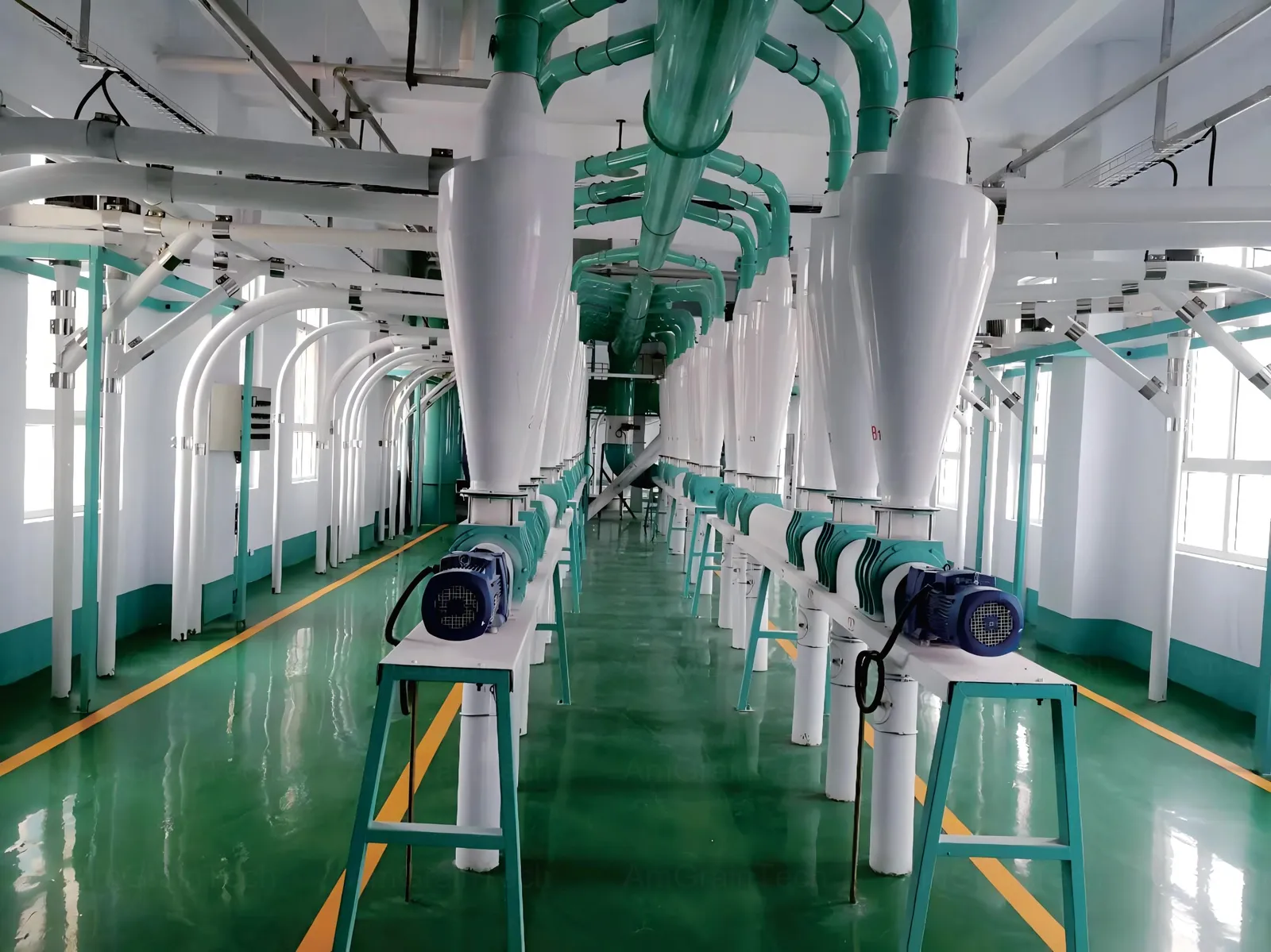
AmGrainTech delivered a 200 TPD rice milling project in Southeast Asia; the processing line covers complete rice milling from 0.8 t/h to 200 TPD, engineered and manufactured at our 130,000 m² base, exported to 30+ countries with installation by our own engineers. Upgrades for small and mid-size mills in Lampung, Sumatra and Java are among the project types we handle most.
1. Five Upgrade Signals: Two or More, Start the Assessment
| Signal | Quantified reference | Note |
|---|---|---|
| ① Breakage rising | Same paddy batch, 3+ percentage points above three years ago | Rule out worn rubber rolls and adjustment first; count as equipment only after that |
| ② Head rice falling | Below 65% and trending down (common indica line, industry ref.) | Recovery depends on paddy and operation — compare against your own history, not other mills |
| ③ Power per tonne up | 20%+ above your historical level | Worn clearances and aging motors both push consumption |
| ④ Mid-season stoppages up | Noticeably more breakdown downtime in peak harvest | Spare-parts starvation is the driver — and it worsens |
| ⑤ Off-grade output up | Uneven whiteness, bran residue, batch inconsistency | Classic symptom of outdated polishing and sorting |
Method: pull three years of same-quarter production records and compare vertically (same paddy, same shift). Recovery is not a fixed number — it moves with paddy cleanliness, moisture and machine condition — so your own history is the only fair baseline. Any supplier quoting a guaranteed recovery figure without seeing your data deserves skepticism.
2. The Four-Step Path: You Don't Have to Do It All at Once
Step 1: husking and rubber-roll system (fastest payback). The paddy husker is the heart of the line — roll speed differential and roll-gap precision decide checking and breakage increments. Current-generation huskers shell more with less roll wear than 1990s units; replacing this step alone commonly pays back in 6–12 months (industry reference).
Step 2: whitening and polishing. Old single-pass abrasive whitening "grinds hard" and is a major breakage source. Multi-pass gentle whitening (abrasive + friction rolls) with low-temperature polishing cuts breakage at the same degree of milling. On a tight budget, replace whitening first and let the old polisher bridge.
Step 3: grading and color sorting. A color sorter is the watershed between selling bulk rice and selling a brand. Sorter precision decides which orders you can accept — supermarket and export channels effectively require it. See also what moves head rice yield.
Step 4: automation and data. Interlocked controls, online metering, alarm systems. For 2–5 t/h mills, automation comes last — fix the process sections first, then the control layer.
Capacity caution: when replacing section by section inside an old building, re-match every section to the bottleneck — the classic error is a 5 t/h husker feeding a 3 t/h whitening section: the bottleneck survives, the investment idles.
3. Changeover Without Stopping: Three Workable Plans
The harvest cannot wait — the hardest constraint is not money, it is the time window:
- Phased cutover: bring the new line in two phases. Phase one: husking + whitening, producing while the old line keeps polishing and grading; phase two completes the rest. Investment releases twice, capacity never gaps.
- Interface reserve: size new equipment at 1.2× the old line's capacity, so surplus during changeover absorbs backlogged orders.
- Between-season construction window: the gap between harvests is typically 4–8 weeks — which makes the supplier's installation team showing up on time the decisive variable. Put the "installation window" (arrival date, duration, acceptance) into the contract — it deserves more negotiation time than the discount.
4. What Modernization Costs (Industry Reference)
| Scope | Typical range (USD, industry ref.) | Notes |
|---|---|---|
| Husking section only (1–2 t/h) | $10,000–40,000 | Fastest payback |
| Husking + whitening + polishing (2–5 t/h line) | $60,000–250,000 | Mainstream upgrade package for small/mid mills |
| Full 5–20 t/h line renewal (with color sorter) | $150,000–600,000 | Depends on sorter channels and automation |
| New 20–50 TPD plant (industry ref.) | $120,000–200,000 (20 TPD) to $400,000–600,000 (50 TPD, full auto) | Including civil and installation |
(Ranges from public quotations of Chinese exporters and trade media, 2025–2026; budgeting reference only — actual figures follow site conditions, capacity and automation.)
A practical yardstick: add "recovery improvement × annual throughput × whole/broken price spread" to annual power savings, and divide the investment by that sum. For mills above 2 t/h running most of the year, process-section upgrades commonly pay back within 2–3 years (industry-reference model). For full investment logic, see calculating the payback period.
5. Three Actions for Mill Owners
- Get a line assessment before talking purchase: ask a supplier to assess against the five signals above — assessment is free; blind replacement is not.
- Decide scope and bottleneck together: check section-by-section capacity matching to avoid "fast head, blocked waist".
- Write the installation window into the contract: miss the between-season window and the cost is a full year; a supplier's on-site commitment is worth more than a price discount.