
When owners look at equipment, the first glance is often at shape, color, and price. But in our 130,000㎡ production base we've repeatedly verified: whether a machine runs reliably for ten years under Kazakhstan's -30℃ or Ghana's +45℃ comes down to three things—what steel was used, how it was welded, and to what tolerance it was controlled.
1. Structural Steel Grade: Not "the Pricier the Better," but "the Right Match"
The structural parts of grain machinery (tower body, silo wall, frame) bear alternating loads, material wear, and climate erosion long term. Taking a steel silo cylinder as an example, AmGrainTech uses Q355B structural steel roll-formed—it balances strength, toughness, and weldability, ensuring cylinder rigidity under full load while suiting stable automated-line processing. The wrong grade (too soft deforms easily, too hard is hard to weld) instead plants hidden risks.
2. Welding Is the "Joint" of Equipment Life
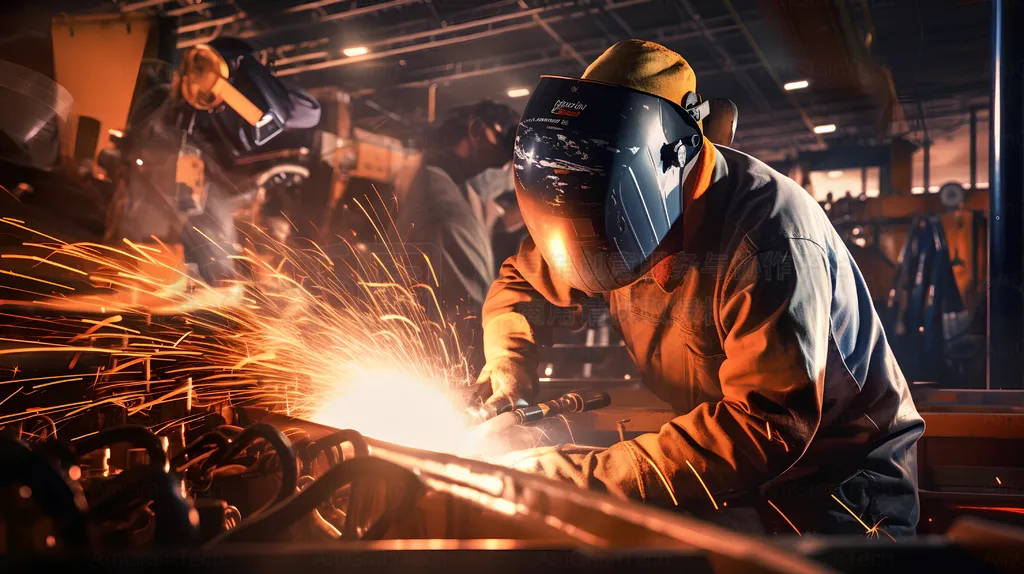
The weld is the most force-prone part of a structure. Our key structures use automated welding (e.g., submerged-arc welding, robotic welding); versus manual work, the advantages are threefold:
- Stable penetration: avoids common manual-weld defects like cold welding and slag inclusion;
- Controllable distortion: uniform heat input, less post-weld correction;
- High consistency: thousands of welds in one batch are close in quality, easy for QA traceability.
3. Precision Is "Accumulated"
Drying towers and steel silos are assembled from hundreds or thousands of structural parts; a ±0.05mm deviation per part accumulates across the whole tower into differences in sealing, dynamic balance, and long-term reliability. We replace manual work with CNC automated lines, so each stage's precision accumulates into a plant that "performs as designed," not one relying on a master's feel.
We own a 130,000㎡ proprietary production base in Henan with over a dozen standardized heavy-industry workshops. Steel silo cylinders are roll-formed from Q355B structural steel, key-part machining tolerance controlled within ±0.05mm, guaranteed consistent and traceable by CNC automated lines. This manufacturing base is the prerequisite for equipment to run stably across the global -30℃~+45℃ climate range. See Factory and Manufacturing Capability and Why Choose Us.
4. How Owners Can "See Through" Manufacturing Quality at Purchase
| Can request to see | What it tells you |
|---|---|
| Material certificate (mill certificate) | Whether the structural steel grade is as claimed, not substituted with inferior material |
| Weld inspection report (NDT/tensile) | Joint reliability of key welds |
| On-site inspection of work-in-progress | Whether automation level and process control are as claimed |
These three predict a machine's state ten years out better than "5% lower quote."