
Many owners, when procuring a steel silo, focus on plate thickness, galvanizing, and sealing strips—all certainly important. But in our delivered projects in Kenya, Central Africa, and elsewhere, we've repeatedly verified: what determines whether a batch of grain can be safely stored until out-loading, and whether mold rate and moisture rebound can be held down, is the silo's ventilation and temperature-control system. The silo body is a container; ventilation and temperature control are the "freshness" engine.
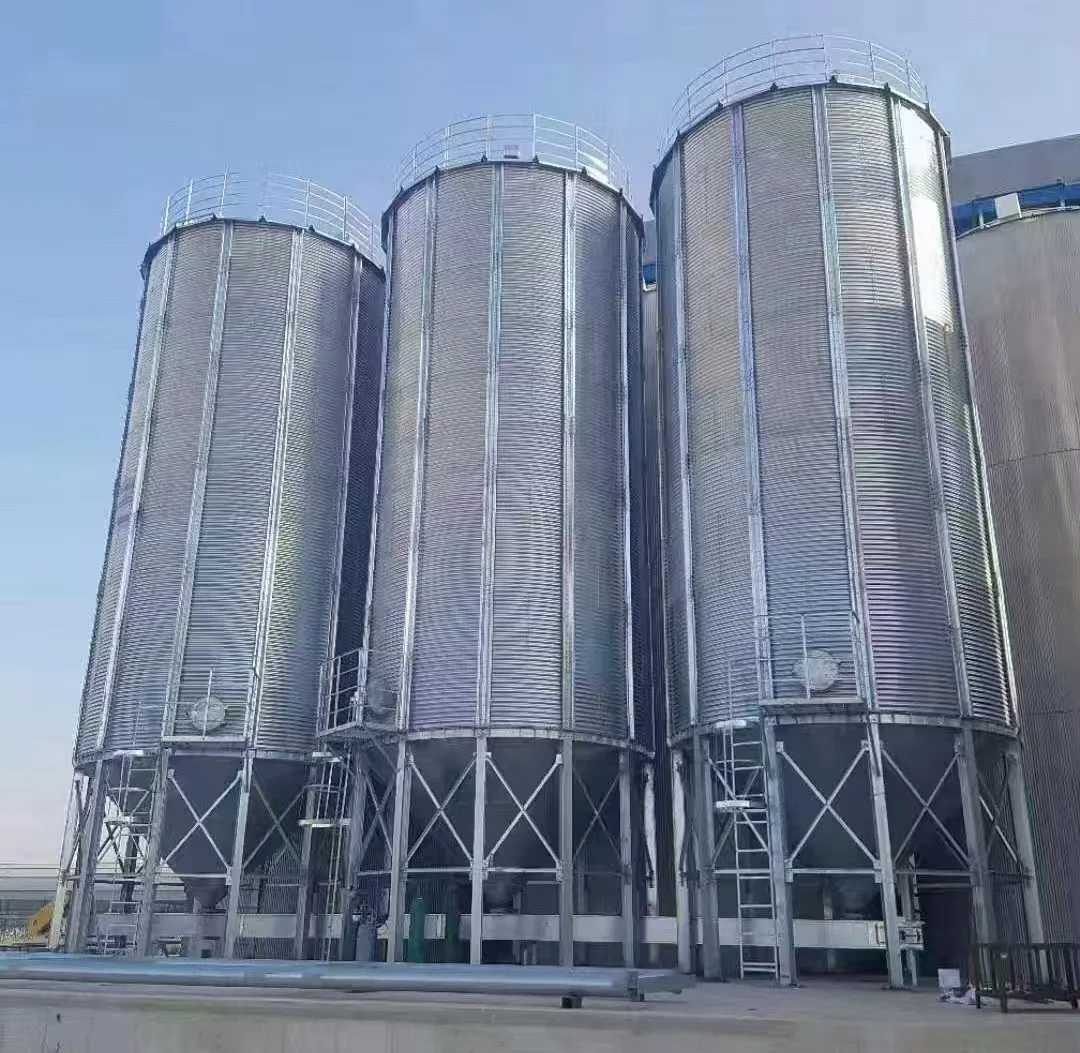
1. Ventilation Solves Two Problems
Ventilation isn't just "blowing some air"; it solves two things at once:
- Moisture reduction / temperature equalization: if in-loaded grain has high moisture or temperature stratification in the silo, mechanical ventilation forces air through the grain bulk, removing moisture and flattening the temperature gradient;
- Preventing "hot spots": localized heating in the grain bulk from respiration or condensation forms a mold source; timely ventilation kills the hot spot in its infancy.
2. Two Mainstream Ventilation Methods
| Method | Principle | Suitable for |
|---|---|---|
| Floor duct / radial ventilation | Air ducts laid at the silo bottom; fan pushes air from the bottom through the grain bulk | Standard on most steel silos; stable temperature equalization and moisture reduction |
| Internal circulation temperature control | Air circulates between top and bottom inside the silo, suppressing condensation | Long-term storage, regions with large day-night temperature swings |
Real projects often combine the two: bottom ducts handle moisture reduction and temperature equalization; internal circulation handles temperature control and condensation prevention during long-term storage.
3. Temperature Measurement Is the "Eye" of Ventilation
Without temperature measurement, ventilation is blind operation. The steel silos we deliver come standard with stratified temperature-sensing cables, with multiple sensors arranged along the silo depth, paired with a control cabinet that displays each layer's temperature in real time. Once an abnormal temperature rise in a layer is detected, the system prompts priority ventilation of that silo—eliminating the "hot spot" inside the grain bulk, rather than waiting to smell mold at out-loading.
AmGrainTech steel silos use hot-dip galvanized plates with bolt + sealing-strip joints, suited to a climate range of -30℃~+45℃; the standard configuration includes ventilation ducts and a stratified temperature-sensing system, with ventilation volume designed by the engineering team per on-site climate and crop type. We delivered a 10,000-ton steel silo cluster in Kenya, relying on this ventilation and temperature-control logic to secure storage safety under humid tropical climate. See Grain Storage Equipment and Bulk Grain Storage Solutions.
4. Configuration Differences Across Climates
- High temperature and high humidity (Southeast Asia, West Africa, Central Africa): focus on dehumidification and condensation prevention; ventilation volume must be sufficient, temperature-sensing density high, add internal circulation if needed;
- Extreme cold (Central Asia, Eastern Europe, -30℃): focus on insulation and freeze protection; ventilate only when grain temperature is too high, avoid wall condensation, with heating or insulation layer;
- Large temperature swings (continental climate): internal circulation temperature control is mandatory to suppress wall condensation from day-night swings.
The same steel silo needs a completely different ventilation strategy under different climates—which is exactly why we insist on "design per site" rather than selling a universal silo.