
Turnkey Grain Projects: How AGT's EPC Delivery Reduces Owner Risk
"Turnkey" is not a slogan — it means consolidating design, manufacturing, logistics, installation, commissioning and training under a single party responsible for delivery. This article uses real projects to show how the EPC model reduces interface and liability risk for the owner.
Seibert Ming· 2026-07-23·· Last updated on 2026-08-03 9 min read
Summary: A turnkey project consolidates design, manufacturing, logistics, installation, commissioning and training under a single responsible party (EPC) — the owner only needs to "turn the key." Using real projects in Kazakhstan, Angola and Kenya, this article shows how this model minimizes interface and liability risk.
When building grain projects overseas, what owners fear most is not "expensive equipment" but "too many steps, scattered responsibility" — one company for design, another for manufacturing, yet another for installation, with each pointing fingers when problems arise. AmGrainTech's answer is the EPC (Engineering–Procurement–Construction) single-responsible-party model: from concept to production, you deal with only one team.
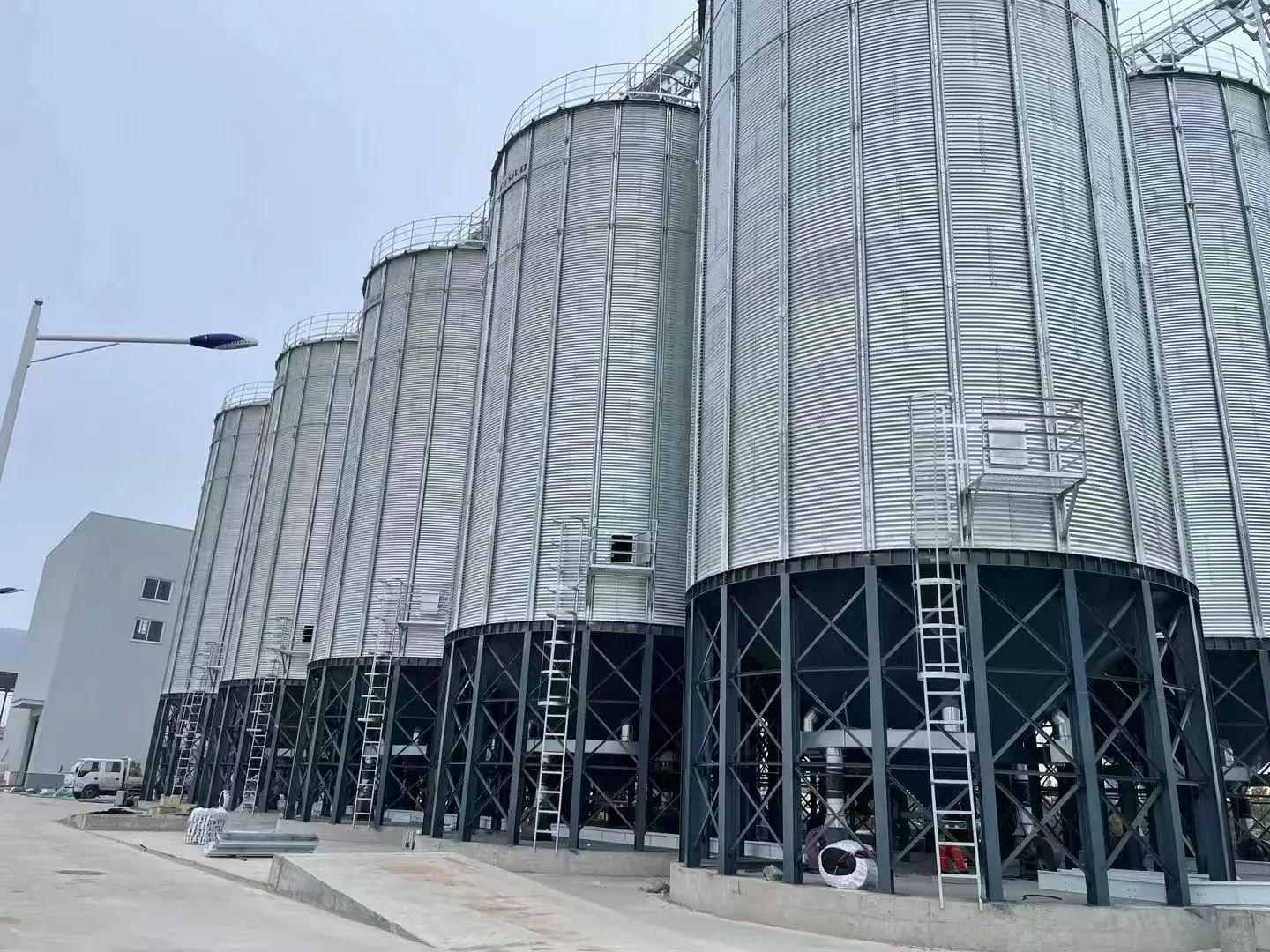
Project delivery site
1. Risk Hides in the "Interfaces"
Multi-supplier projects carry a hidden risk in the interfaces: embedded steel structures that don't line up with process equipment, sea-packaging disconnected from on-site lifting, equipment parameters found mismatched during commissioning. Every interface is a potential blame-shifting point. The EPC model pulls all of these inside a single boundary of responsibility.
2. How Real Projects Are Delivered
Kazakhstan 65 / 100 T/H drying (from 2023): Building on accumulated experience from existing Central Asian projects, EPC covered equipment supply, engineering design, installation supervision and training;
Angola 500 TPD continuous drying center (2025): A large turnkey project, including corrosion resistance and adaptation to local climate;
Kenya 10,000-tonne steel silo group (2019): Storage EPC, including ventilation and temperature-control system;
Central Africa 150 TPD drying + 4,000-tonne storage (2025): Integrated turnkey drying and storage.
The owner turns the key and goes into production — provided someone behind the scenes carries design, manufacturing, logistics, installation, commissioning and training.
AmGrainTech's EPC Foundation
We operate a 130,000 m² owned production base with more than ten heavy-industry workshops. Equipment is developed and manufactured in-house (not OEM/white-label), and our engineers are dispatched directly by us (not outsourced) to handle on-site installation, commissioning and remote support. This means design, manufacturing and installation are closed-loop by one team — interface risk is absorbed internally rather than passed to the owner. Browse Global Project Cases and Turnkey General Contracting.
3. What the Owner Gets
Pain point
How EPC resolves it
Multiple suppliers passing the buck
Single responsible party; issues closed-loop internally
Interface misalignment
Steel structure and process coordinated from the same model
No after-sales support
In-house engineers handle the full cycle, with instant remote-diagnosis response
Schedule out of control
Design–manufacturing–logistics–installation scheduled on one line
For owners investing in grain infrastructure overseas for the first time, EPC is the most direct way to turn "unknown risk" into "one accountable team."
What's the difference between EPC and simply buying equipment?
Buying equipment only delivers machines; EPC delivers "a factory ready for production" — design, manufacturing, logistics, installation, commissioning and training closed-loop by a single responsible party. The owner deals with one team, with interface and liability risk absorbed internally.
What EPC project experience does AmGrainTech have?
Real cases include Kazakhstan 65/100 T/H drying (from 2023), Angola 500 TPD continuous drying center (2025), Kenya 10,000-tonne steel silo group (2019), Central Africa 150 TPD drying + 4,000-tonne storage (2025), and more. See the project cases page for details.
Who does the on-site installation?
AmGrainTech's in-house engineers (not outsourced) are dispatched to handle on-site installation, commissioning and operator training; day-to-day operation is supported via WhatsApp video calls for remote diagnosis. One closed-loop team keeps responsibility clear.
Is EPC suitable for owners investing overseas for the first time?
Especially so. It consolidates design, manufacturing, logistics, installation, commissioning and training under a single responsible party, turning the "unknown risk" of multiple suppliers into "one accountable team," significantly reducing the coordination difficulty of a first overseas project.
Want to hand your project to a single responsible party?
Tell us your crop, capacity and target region, and we'll assess feasibility and provide an EPC proposal framework.
* The project information in this article is an overview of delivered real cases; specific project scope, timeline and technical deliverables are subject to the terms of the formal agreement.