
The first budget input is not a price — it is silo type, because it sets the cost structure of everything after it:
| Dimension | Flat-bottom silo | Hopper-bottom silo |
|---|---|---|
| Single-silo capacity | 50–20,000 t | 10–5,000 t |
| Discharge | Sweep auger in-silo discharge | Gravity self-flow |
| Unit cost | Lower (tonnage dilutes cost) | Higher (cone structure and support) |
| Best for | Long-term storage, low turnover | Frequent turnover, feeding lines/loading |
| Foundation | Ring-beam, lower demands | Cone support structure, higher demands |
Decision rule in one line: grain sits a season or more before discharge — flat bottom; the silo is a buffer feeding a line or truck loading every day — hopper bottom. Large projects commonly combine both: a flat-bottom field plus a few hopper units as loading buffers.
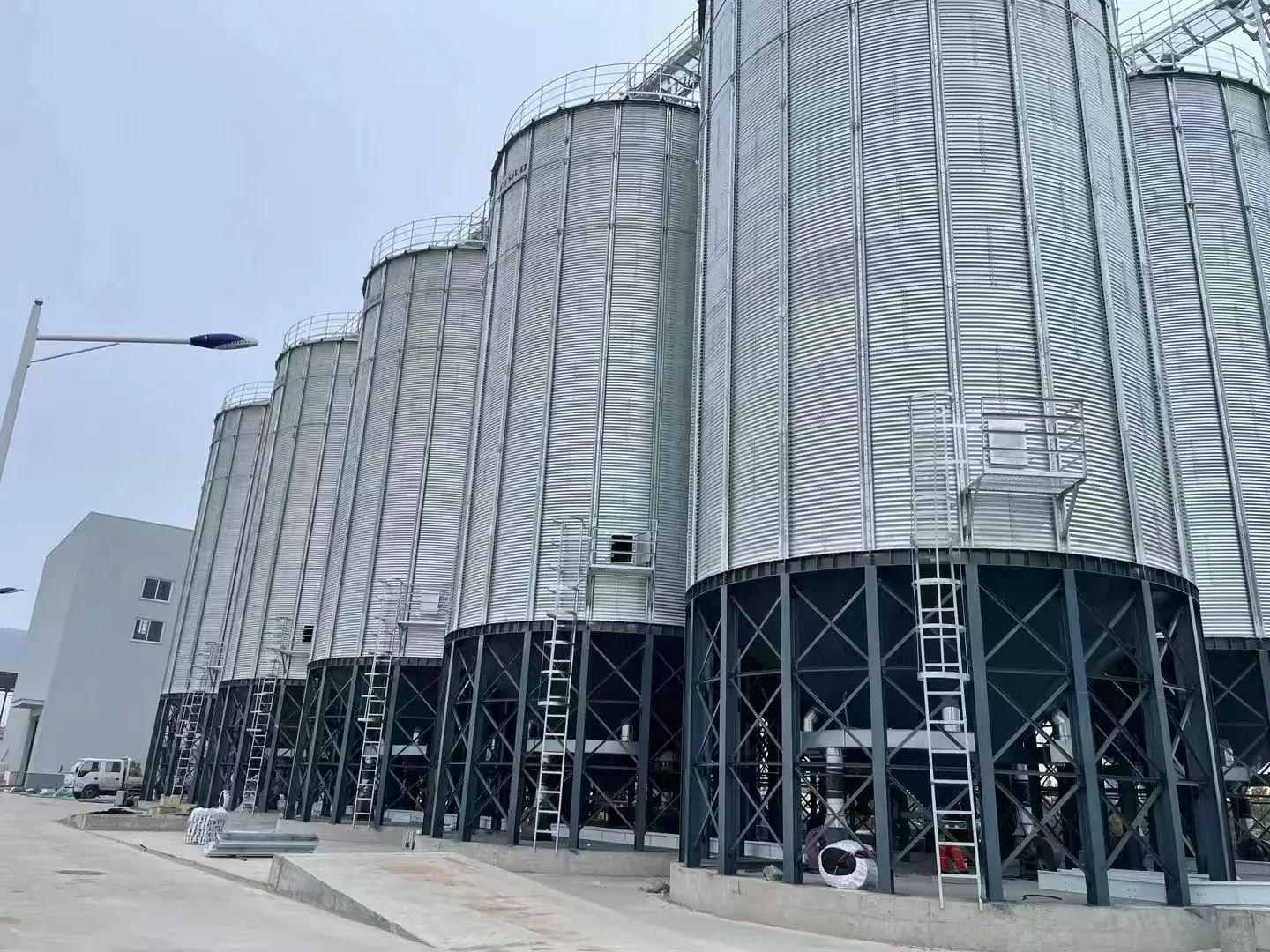
Layout matters too: 6 × 5,000t does not price proportionally to 3 × 10,000t — larger diameters use less steel per tonne but raise foundation and erection difficulty; more silos multiply fans, cables and dust systems. Get two or three layout options from the supplier before the budget has a landing point. For the type trade-offs in depth, see flat bottom vs hopper bottom silos.
AmGrainTech steel silos cover flat-bottom 50–20,000 t and hopper-bottom 10–5,000 t, exported for 20+ years across 30+ countries. Delivered references include the Kenya 10,000-tonne silo project and a 150 TPD processing + 4,000-tonne storage complex in Central Africa — from layout design to first fill.
1. Nine Cost Items: Steel Is Only the First Number
| # | Cost item | Content | Typical share (industry ref.) |
|---|---|---|---|
| 1 | Shell steel and galvanized parts | Walls, roof, stiffeners | 35%–50% |
| 2 | Auxiliary systems | Aeration, temperature cables, fumigation sealing | 8%–15% |
| 3 | Conveying | Bucket elevators, chain conveyors, dust collection, metering | 10%–18% |
| 4 | Civil works | Ring beam / cone supports, paving, roads | 10%–20% |
| 5 | Installation | Erection labor, lifting equipment, test runs | 5%–10% |
| 6 | Logistics and duty | Sea freight, inland transport, customs | 5%–12% |
| 7 | Electrical and control | Distribution, control cabinets, remote monitoring | 2%–5% |
| 8 | Training and spares | Operator training, first-year parts package | 1%–3% |
| 9 | Contingency | FX, vessel schedules, ground surprises | 5%–10% |
The structure explains the error: steel is 35–50% — the other half sits in auxiliaries, civil, logistics and installation. The right budgeting posture is an itemized nine-line estimate from the supplier, never a single total to sign.
2. A 10,000-Tonne Framework Example
Take a 2 × 5,000t flat-bottom storage complex as the thinking frame (illustrative structure, industry-reference frame, not a quotation):
- Shell and auxiliaries (~55–65% of total): steel quantity follows the diameter/height option; aeration and temperature cables are configured per grain type — maize, wheat and paddy ventilate differently.
- Conveying scheme (10%–18%): the decisive question is "where does grain come from, where does it go" — truck intake and rail/port intake are two different investment tiers.
- Civil (10%–20%): the geotechnical report is a precondition for the civil budget — pile treatment on soft soil can double this line, the number-one overrun cause in government projects.
- Logistics and installation (10%–20%): silos ship as heavy break-bulk; inland distance and road conditions enter the cost directly; lifting equipment prices at local rental rates.
- Contingency (5%–10%): for export projects, reserve no less than 7% for FX and vessel volatility.
Per-tonne sanity anchor: landed all-in cost (with auxiliaries, civil and installation) commonly runs 1.8–2.5× the bare steel material cost (industry reference). Budgeting from that multiplier beats budgeting from steel price alone.
3. The Three Items Storage and Government Projects Underprice
- Ground conditions and civil works: locking the civil budget before the geotechnical report is the top overrun source. Build a "post-detailed-survey civil adjustment" mechanism into the contract.
- Grain-condition auxiliaries: government storage programs set code requirements for temperature monitoring, fumigation and aeration; low bids configure to "barely usable" — upgrading to pass acceptance later costs far more than first installation.
- Quantity margin and schedule: design margin between drawing tonnage and delivered tonnage, plus wet-season impact on erection, both become money. Every month of delay is carrying cost and a storage gap — price it in advance.
When the budget gap is large (say, over 30% below what the configuration needs), phasing beats cutting: build a working phase one, complete the plan in phase two. A silo built without temperature cables and aeration is far harder to retrofit than to build right.
4. Five Questions for Suppliers at Inquiry
- Can you issue an itemized estimate across the nine cost items (not one total)?
- How many diameter/height/count layout options did you compare?
- Are aeration and temperature cables designed to which grain-type parameters?
- What are the committed installation headcount and duration, and how is the wet season handled?
- Warranty and response: separate warranty periods for shell and auxiliaries, and fault-response time limits?
Five clear written answers mean a credible offer; unclear lines are where budget holes hide.