
The engineering meaning of turnkey is plain: you provide the land and the tonnage requirement; the supplier delivers a storage system that receives, stores and discharges grain, with people trained to run it. Survey, design, manufacturing, logistics, installation, commissioning and training are all closed out by the supplier.
Conversely, none of the following is turnkey: a quotation that covers only the silo shell; installation written as "supplier guides, buyer installs"; commissioning excluded; training billed separately. These split-scope models are legitimate — buyers with their own construction crews can save money — but they should not carry a turnkey price tag. For the build-vs-buy comparison in detail, see turnkey contracting or buying separately.
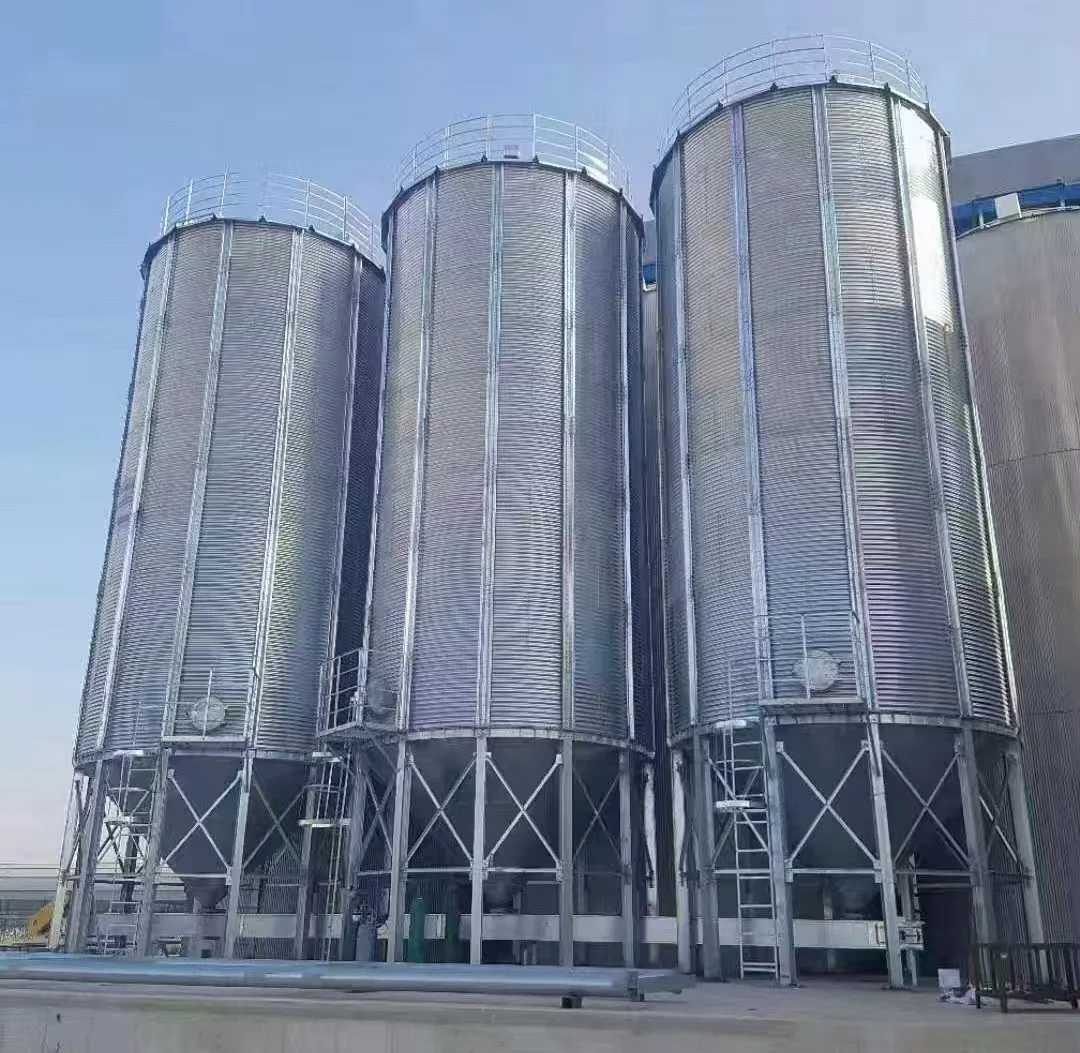
AmGrainTech delivers turnkey projects across its three in-house product lines — drying, steel silos and processing — with 20+ years of export experience in 30+ countries. The silo range covers flat-bottom 50–20,000 t and hopper-bottom 10–5,000 t. A 10,000-tonne flat-bottom silo project in Kenya was delivered from foundation to first fill, with installation and commissioning by our own engineers.
1. The Nine Stages of a Real Turnkey Project
① Site survey and requirement confirmation. The first deliverable is not a price — it is questions: soil conditions, water table, local wind and snow loads, grain sources and flow direction, grid parameters, expansion plans. These answers decide the diameter-to-height ratio, foundation type and phase-two interfaces. A quotation issued without a survey shifts the risk to the foundation stage.
② Process design and drawings. General layout, structural calculations for the shell, aeration and temperature-cable selection, and matched elevator/conveyor sizing. The buyer should receive reviewable design documents, not a rendering.
③ Foundation design. The supplier issues foundation drawings and embedded-item tolerances; civil works can be done locally — but drawing depth and tolerance requirements must be explicit. This is the most common dispute point: the erection crew arrives, finds misplaced embeds, and the project stalls.
④ Shell fabrication. Steel grade decides life and safety margin. Industrial-grade silos use Q355B steel; galvanized sheet thickness is calculated from diameter and height. Checkable items: the material certificate, coating weight, and single-batch consistency — mixed batches are a hallmark of low-cost shells.
⑤ Aeration, temperature cables and fumigation sealing. A steel silo is not "a bucket for grain" — it is a temperature and humidity control system: fans and ducts sized against silo volume and grain type, temperature cables layered by silo height, and sealing classes that decide whether fumigation is possible. Low-cost quotations often shrink this to two fans.
⑥ Elevating and in/out conveying. Bucket elevators, chain/belt conveyors and metering equipment, selected against intake rhythm. A collection center and a rice mill have completely different flow logic — this must follow Stage ①, not a standard package.
⑦ Sea freight, inland transport and customs. The trap-densest item in export projects: FOB or CIF? Break-bulk or containers? Who owns the inland leg? Silos are the bulkiest grain-machinery category to ship — a one-tier difference in logistics terms routinely moves the total by 10%.
⑧ Installation and commissioning. Own-engineer erection, verticality checks, no-load and loaded test runs, aeration and temperature-system integration. Confirm headcount, duration, and the definition of "commissioned" — we recommend "temperature-cable readings normal after first fill" as the acceptance point.
⑨ Training and handover. Operator training (aeration timing, reading temperature data, fumigation safety), wear-parts package, warranty terms and response times. The "key" in turnkey is people who can run it and someone to call when it breaks.
2. The Buyer's Checklist: Test Any Quotation Line by Line
| Stage | What the quotation must show | What low-cost quotes omit |
|---|---|---|
| Survey & design | Requirement record, structural calculations | Standard drawings only, no calculations |
| Foundation | Foundation drawings + embed tolerances | "Civil works by buyer" in one line |
| Shell | Steel grade, coating weight, thickness schedule | "Galvanized steel" with no thickness by ring |
| Aeration & temp | Fan count/airflow, cable count and layers | Two fans, no temperature cables |
| Conveying | Equipment list with capacity matching | Standard package pasted in |
| Logistics | Incoterms (EXW/FOB/CIF), inland leg split | FOB only, inland leg vague |
| Installation | Headcount, duration, acceptance criteria | "Supplier guides, buyer installs" |
| Training & spares | Training scope, spares list, warranty period | Training extra, spares priced per event |
How to use it: send this table to the supplier and ask them to answer "included / not included — and on what terms" row by row. An incomplete answer does not mean the offer is bad — it means the missing lines get priced separately, and the total may no longer be cheap. For how the nine items map into money, see budgeting a large-scale silo project.
3. Three Low-Price Traps
- Comparing steel by unit price only. A cheaper per-tonne steel price can hide a one-grade-lower thickness and lighter coating across the whole shell — the price difference is clawed back before the silo is even full, paid for in service life and safety margin. Check the thickness schedule ring by ring.
- Shrinking the auxiliaries. The shell is the big number; aeration and temperature cables are small ones — so low quotes cut the small ones first. A silo without temperature monitoring is a container that cannot be managed; for commercial or government storage that is a hard disqualifier.
- Vague installation terms. "Guided installation" means your people climb and their engineer watches. Working at height moves safety liability, schedule risk and quality responsibility with the wording. Write who comes, how long they stay, and what "done" means.
4. When Non-Turnkey Is Actually the Right Call
Fairness requires saying: turnkey is not the only correct answer. With a competent local construction crew, an existing O&M team for a phase-two project, or a budget that must be released in stages, split procurement (shell + own civil + guided erection) can save 10–20%. The precondition is that someone can carry the interface risks — foundation embeds, erection qualifications, commissioning responsibility. The value of turnkey is, in essence, transferring exactly those three risks to a specialist.
5. How Long from Contract to First Fill
For a 5,000–10,000 t export silo project (planning reference): contract and detailed design 2–3 weeks; shell fabrication 6–8 weeks; sea freight 3–5 weeks (break-bulk schedules vary — keep margin); civil works in parallel with production, then erection 3–4 weeks after arrival; commissioning and training about 1 week. Roughly 3–5 months from contract to first fill, with civil progress and vessel schedules as the two least controllable variables — lock those first when planning backwards. For a fuller budget framework, see our Kenya 10,000-tonne silo project reference.