
200 TPD Rice Processing Line
Export-Grade Quality · India · Delivered 2019

AmGrainTech delivered a 200 TPD rice processing line in Punjab, India in 2019, engineered for long-grain Basmati-class paddy and export-grade standards: broken-rice rate controlled within 12% (industry average ~20%), impurity content ≤ 0.1% — and modular design for fast on-site assembly.
Project Gallery
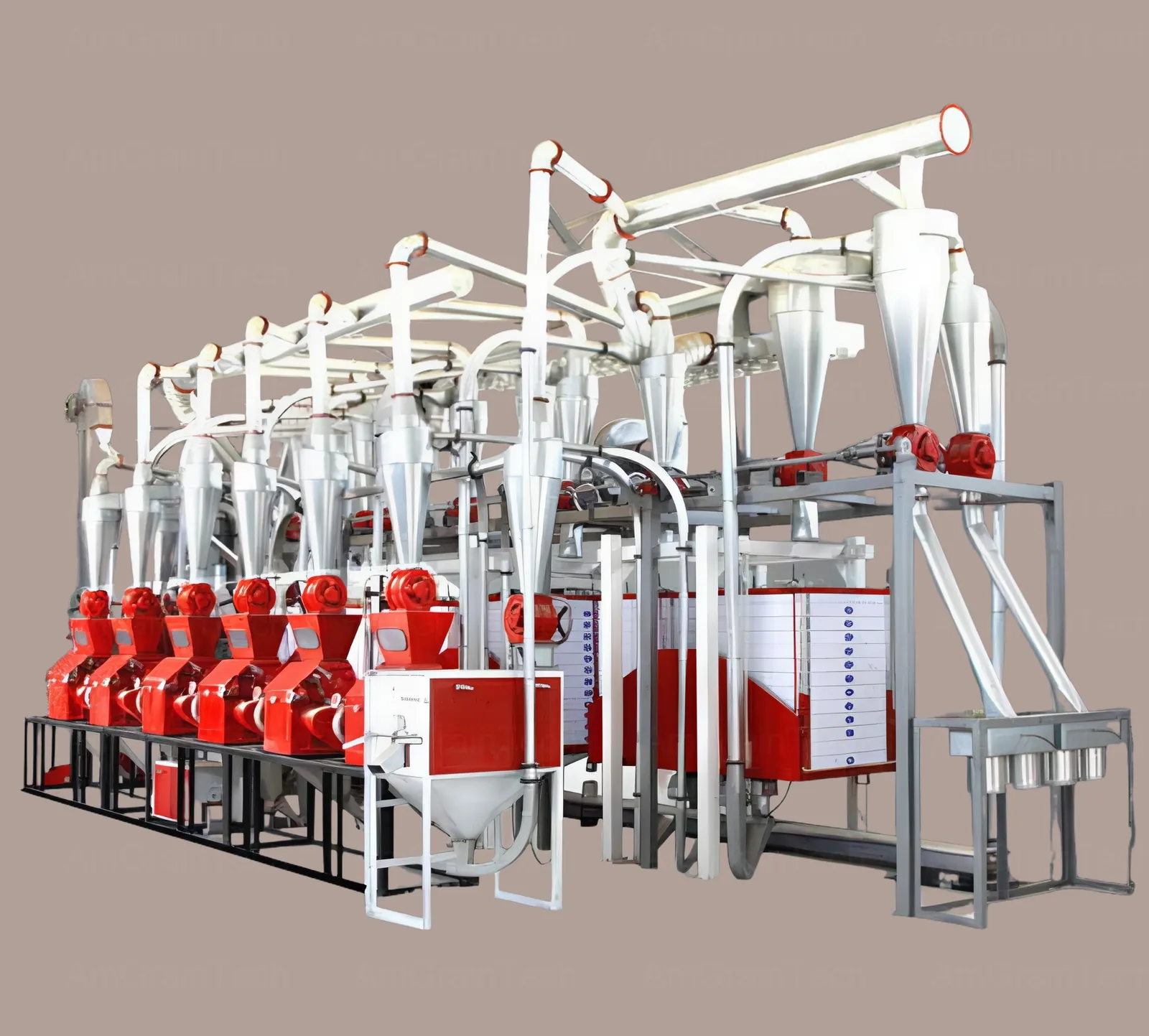


Technology: Export-Grade Processing for Long-Grain Paddy
Punjab produces premium Basmati and ordinary white rice, but the client's outdated equipment meant low yield and a high broken-rice rate. Three engineering choices closed the gap to export standards:
Long-Grain Whitening Optimization
Whitening parameters were optimized for the long-grain paddy varieties commonly used in India — gentle staged pressure keeps kernel length intact, which is exactly what Basmati export grading demands.
CCD Color Sorting
Color sorting removes discolored and glass-like particles, protecting the visual uniformity that export buyers inspect first.
Modular Design
The entire equipment set uses modular design for easy transportation and on-site assembly — critical for cost-controlled projects in price-sensitive markets.
Process Flow
Complete processing chain from raw paddy to export-grade rice:
- Raw grain cleaning — destoning + impurity removal.
- Husking → paddy separation → multi-pass whitening (long-grain optimized)
- Polishing → grading → color sorting (discolored and glass-like particle removal)
- Automatic weighing and packaging
Project Background, Challenge & Solution
Client Background: The client is a large rice-processing enterprise in Punjab, northern India, located in a major rice-producing region. The area produces hundreds of thousands of tons of premium Basmati rice and ordinary white rice annually, but processing equipment is generally outdated, with low yield and high broken-rice rates.
Challenge: The client wanted to upgrade to a modern fully automated line with 200 TPD capacity; the finished product needed to meet export-grade standards (broken-rice rate ≤ 15%, impurity ≤ 0.1%). The Indian market is price-sensitive, requiring investment costs to be controlled while ensuring quality.
Solution: AmGrainTech provided the complete chain — cleaning (destoning + impurity removal) → husking → paddy separation → multi-pass whitening → polishing → grading → color sorting → automatic weighing and packaging — with whitening optimized for long-grain varieties and modular design for fast assembly.
Result: Delivered and commissioned in 2019. The processed rice met export-grade standards, with the broken-rice rate controlled within 12% (industry average ~20%) and significantly improved head rice yield. The line helped the client enter the high-end rice export market and became a representative case of Chinese grain machinery in South Asia.
Project Outcomes
Delivery & Commissioning Timeline
Line configured for long-grain paddy and export-grade targets
Equipment built in transport-friendly modules at our base (ISO 9001)
Fast modular assembly with installation supervision
Commissioned 2019; export-grade output confirmed
Why Broken-Rice Rate Decides Export Access
- Export grading is unforgiving — the ≤15% contract target already beats the local norm; landing at 12% gives the client grading headroom that commands better prices.
- Long grain breaks under generic settings — Basmati-class kernels need lower whitening pressure and staged passes to stay whole.
- Color sorting protects the first impression — discolored and glass-like particles are the fastest way to fail an export inspection.
- Modularity controls cost — flat-pack transport and fast assembly keep the investment viable in a price-sensitive market.
Client Evidence
“For export basmati, the broken-rice figure is everything. Staying consistently under 12%, we now clear buyer inspections on the first pass.”
Frequently Asked Questions
What is the capacity of the India rice processing project?
What broken-rice rate does it achieve?
Which quality standards does the finished product meet?
How was the line adapted to Indian paddy?
What does the color sorter remove?
Why modular design?
What was the business outcome?
What is the process flow?
Explore Related Solutions
Targeting export-grade rice quality?
Tell us your paddy variety, capacity target and export standard — we return a configured processing line proposal with projected broken-rice rate.