
500 TPD Grain Drying Center in Angola
Tower-Type Continuous Dryer · Maize & Wheat · Delivered 2025

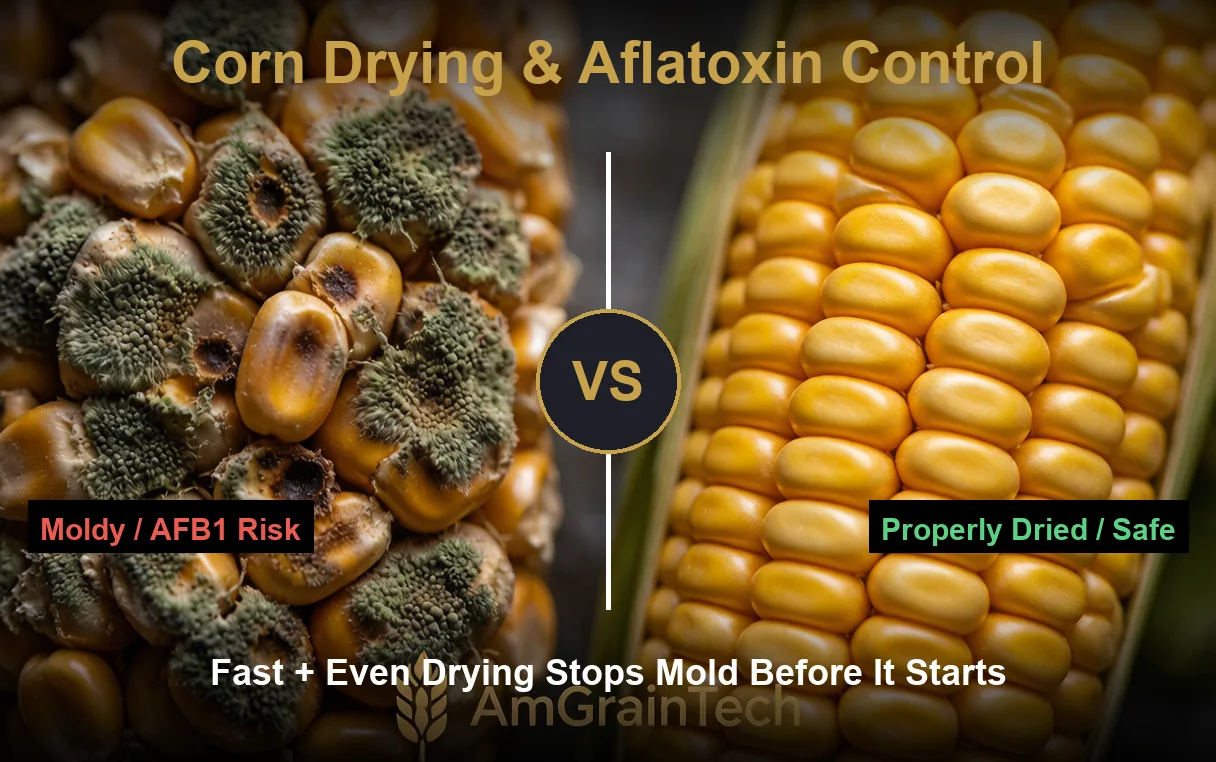
AmGrainTech delivered a 500 TPD tower-type continuous grain drying center in Angola in 2025 — a 5HL-500 mixed-flow dryer paired with an RS-610 multi-fuel burner, engineered for tropical-climate maize and wheat. The plant dries high-moisture grain from 22–28% down to a safe 13–14% in a single pass, sharply cutting the mold and aflatoxin losses that plague rainy-season harvests in Africa — while using roughly 15% less fuel than comparable continuous dryers.
Project Gallery
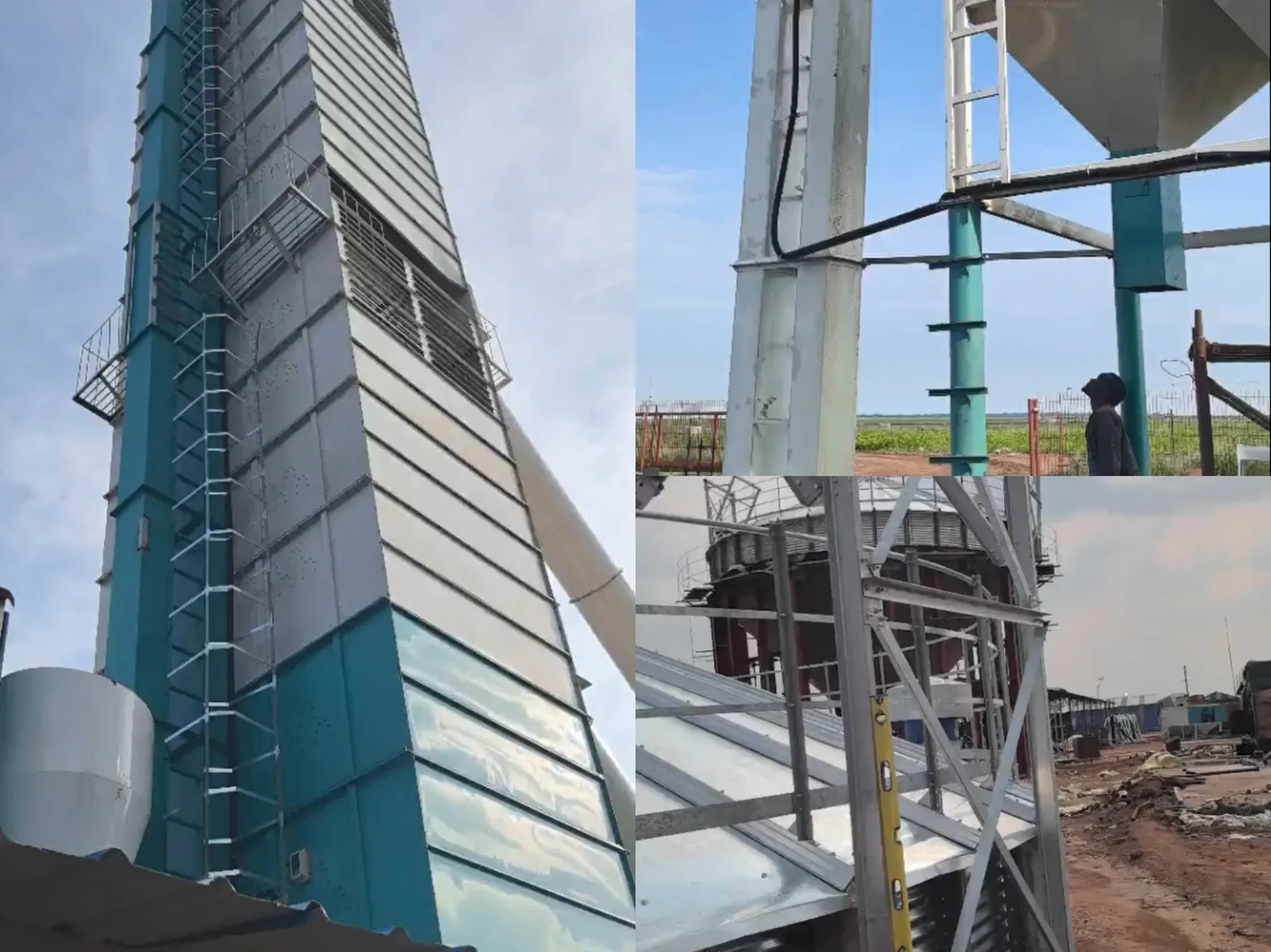
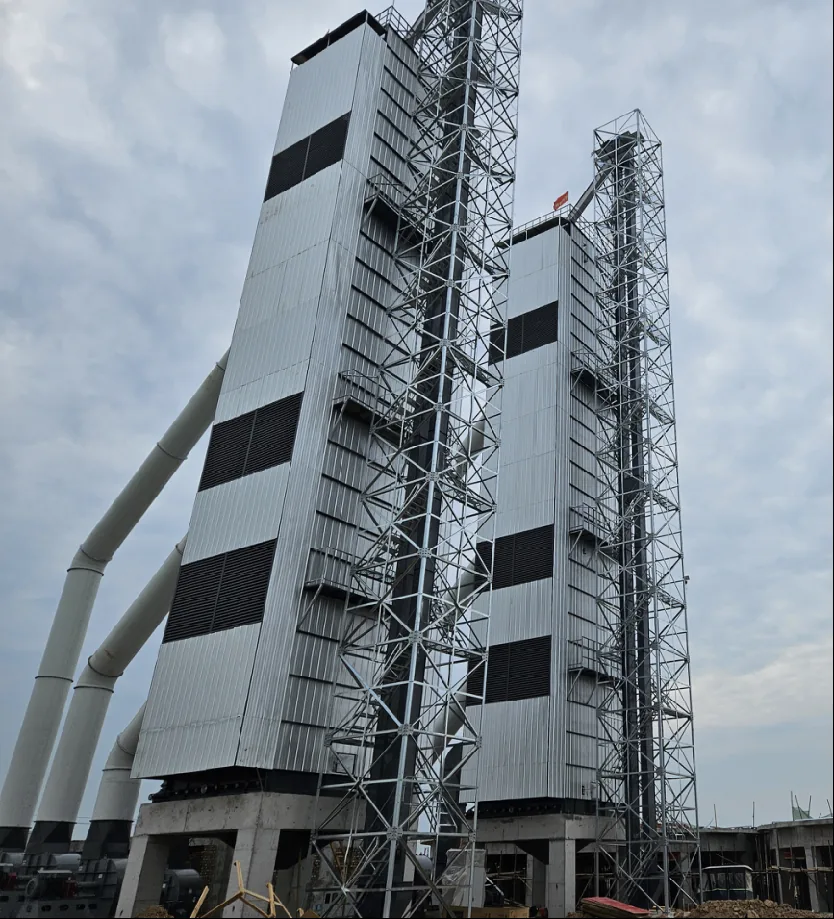
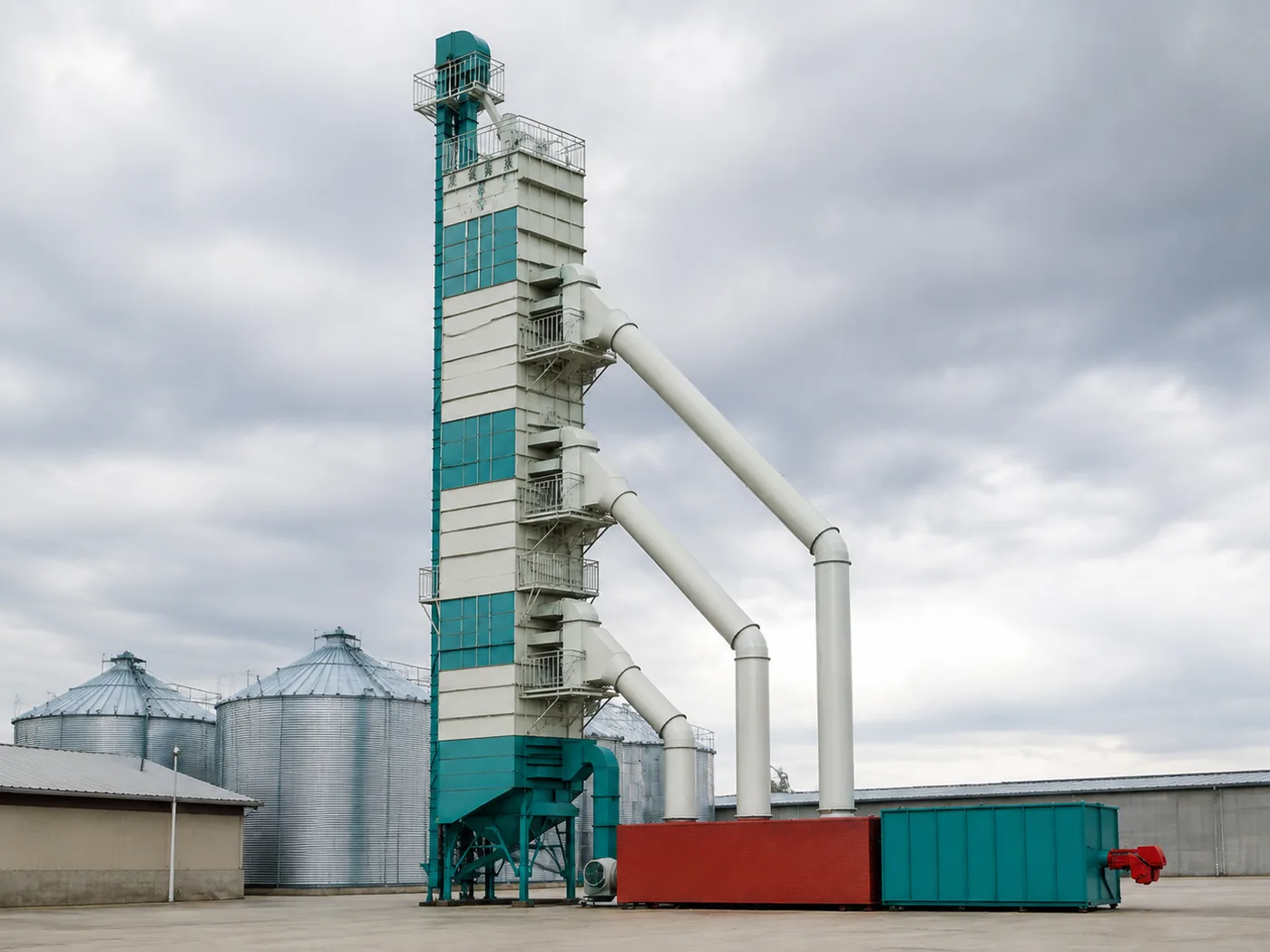
Technology: Three-Stage Mixed-Flow Drying
The 5HL-500 is not a batch dryer scaled up — it is a continuous mixed-flow tower built around three stages that run as one flow: drying, tempering and cooling. This is what makes 500 t/d possible with low breakage and low fuel cost.
Mixed-Flow Drying
Staggered angular air ducts pass hot air through the grain layer from multiple directions. Thin grain layers and close spacing give far higher hot-air penetration than single-direction drying — fast, even moisture removal.
Multi-Stage Tempering
Between drying passes the grain rests, letting surface heat move inward and internal moisture migrate outward. This balances moisture inside each kernel and sharply reduces cracking and breakage.
Counter-Flow Cooling
Cooling air enters from the bottom and rises against the grain flow, lowering grain temperature slowly and evenly to safe-storage level — no thermal shock, ready for direct storage.
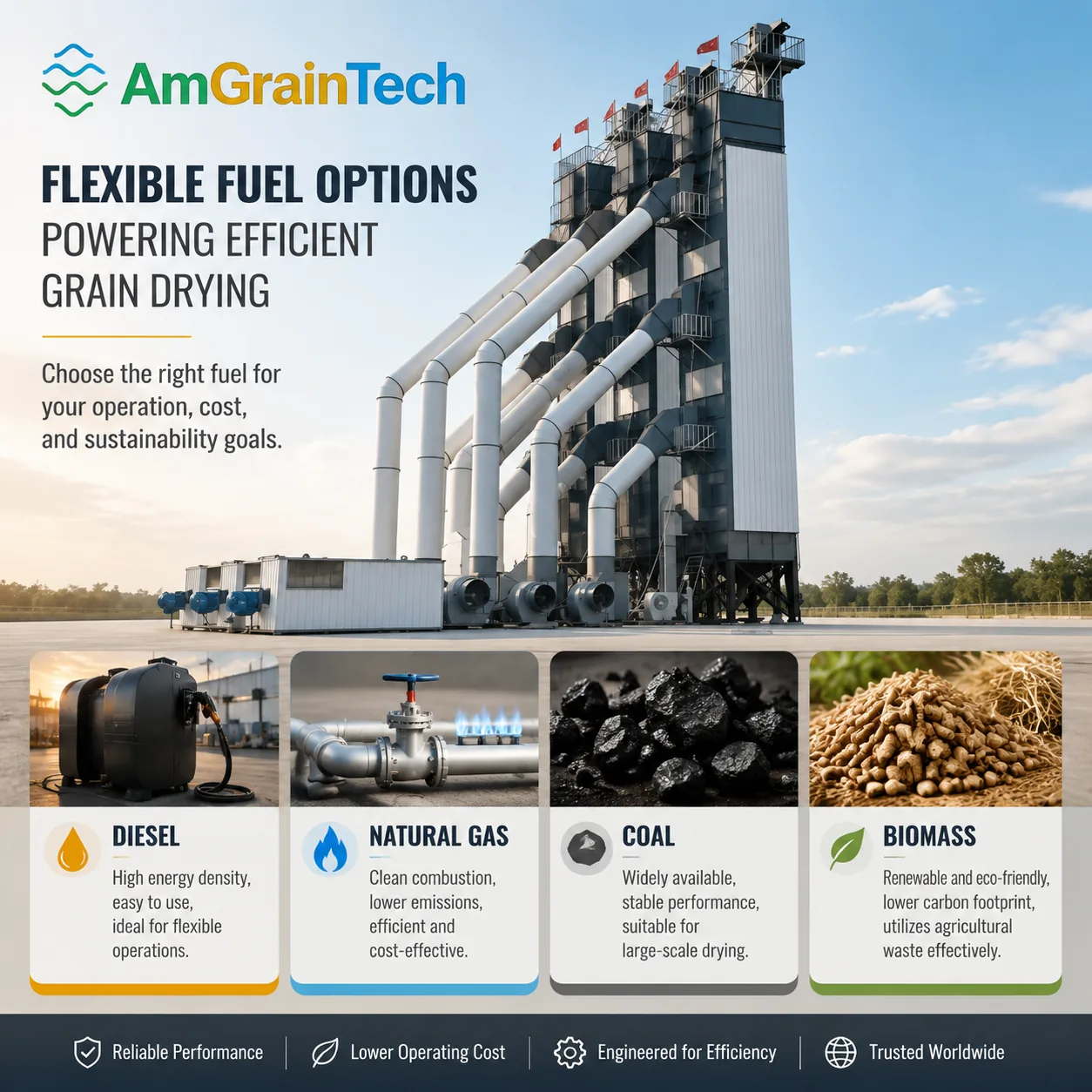
Fuel Flexibility: A Multi-Fuel Grain Dryer
Fuel is the largest running cost of any drying center, and in Africa diesel is both expensive and volatile. The RS-610 burner lets the operator switch between locally available and cheapest fuels instead of being locked to one:
- Type A — clean fuels: natural gas, diesel, electricity — suited to strict-emission regions and food-grade drying.
- Type B — economical fuels: coal and biomass pellets (rice husk, straw, wood chips) — suited to cost-sensitive markets.
- Steam: can use waste-heat steam where the plant sits inside an industrial park.
Project Background, Challenge & Solution
Client Background: The client is a large agribusiness in a central Angolan province, primarily engaged in corn and wheat cultivation and procurement. After the local rainy-season harvest, grain moisture typically ranges from 22–28%, creating urgent demand for high-capacity drying facilities to reduce mold losses before storage.
Challenge: Angola's tropical climate is hot and humid, and traditional sun-drying results in loss rates above 15% — with mold and aflatoxin (AFB1) risk rising quickly in high-moisture maize. The client required a continuous drying system with daily throughput above 500 tons, while keeping fuel costs within an acceptable range, since local diesel prices are high.
Solution: AmGrainTech supplied one 5HL-500 tower-type continuous (mixed-flow) dryer rated at 500 TPD, equipped with an RS-610 high-efficiency multi-fuel burner (diesel / biomass pellets / coal) that cuts fuel consumption by about 15% versus comparable equipment. Supporting equipment included bucket elevators plus a horizontal conveying system, and a PLC-based automatic temperature and humidity control system that closes the loop between real-time moisture feedback and burner output. The contract covered equipment manufacturing, ocean freight shipment and remote technical support.
Result: The equipment arrived in 2025 and completed installation and commissioning. It ran at full capacity during the first rainy-season harvest, processing over 30,000 tons of corn and wheat cumulatively, with moisture uniformly reduced from 24% to 13–14% and post-drying breakage increase ≤ 0.2%. The client was satisfied with the fuel economy and drying uniformity.
5HL Series Specifications
This project used the 5HL-500. The 5HL continuous mixed-flow tower series covers 100–1000 t/d in nine models, so the same three-stage drying principle scales from regional collection centers to national grain reserves.
| Model | Capacity (t/d) | Dimensions (mm) | Total Power (kW) | Hot-Air Temp (°C) |
|---|---|---|---|---|
| 5HL-500 (this project) | 500 | 3700×5700×34000 | 224.9 | 45–160 |
| 5HL-100 | 100 | 2400×3600×17700 | 48 | 45–160 |
| 5HL-150 | 150 | 2400×3600×22500 | 81.5 | 45–160 |
| 5HL-200 | 200 | 2900×4200×22500 | 102.7 | 45–160 |
| 5HL-300 | 300 | 3170×4950×30000 | 127.4 | 45–160 |
| 5HL-600 | 600 | 4700×5700×34000 | 273.9 | 45–160 |
| 5HL-1000 | 1000 | 5000×6000×34850 | 465 | 45–160 |
Standard configuration, moisture reduction 13–15% (inlet 25% → safe 14%). Capacity, heat source and moisture-reduction range can be customized per grain type and site conditions.
Project Outcomes
Delivery & Commissioning Timeline
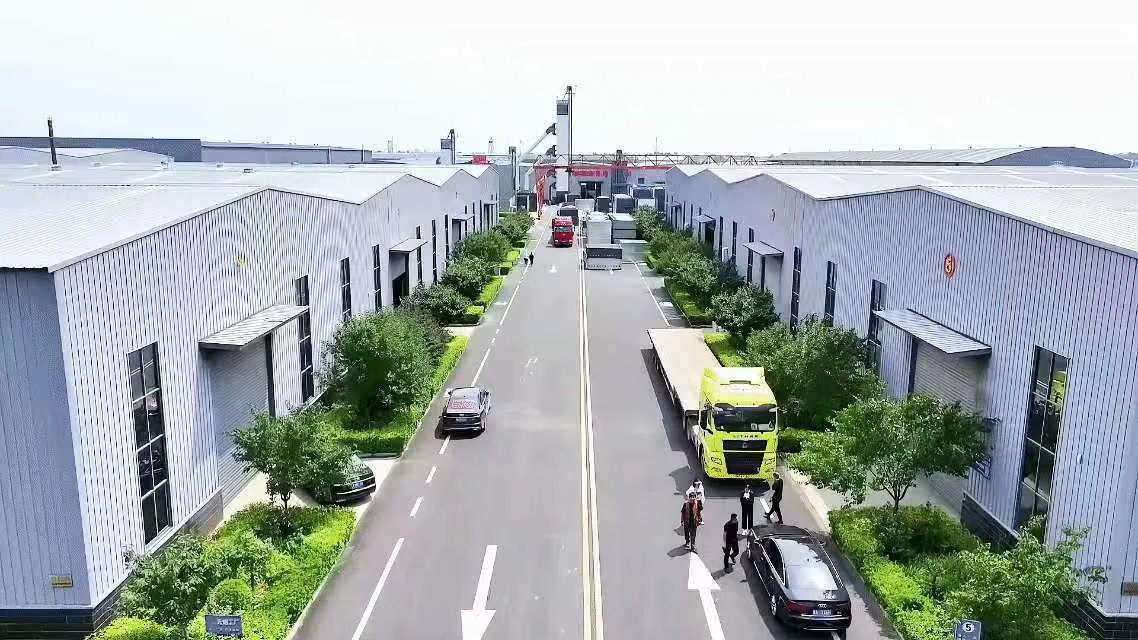
5HL-500 tower + RS-610 burner built at our Henan base (ISO 9001)
Equipment packed and shipped to Angola
Completed 2025 with remote technical guidance
>30,000 t processed at full capacity
Why the ≈15% Fuel Saving Was Achieved
- RS-610 multi-fuel burner — switches between diesel, biomass pellets and coal, letting the operator pick the cheapest locally available fuel instead of being locked to high-priced diesel.
- Staged variable-temperature drying — high temperature and high air volume for the first fast-drying section, low-temperature fine drying afterwards; 15–20% less energy than constant-temperature drying.
- PLC automatic temperature & humidity control — closes the loop between real-time moisture feedback and burner output, eliminating the over-drying that wastes energy in manually tuned dryers.
- Tower-type continuous flow — counter-current hot-air contact keeps thermal efficiency high at 500 TPD scale versus batch-type units.
Client Evidence
“Rainy-season mold had been a headache for years. This tower dries up to 500 t per day of maize — for the first time we can buy grain through the wet season with confidence.”
Frequently Asked Questions
What is the capacity of the Angola grain drying center?
Why use a tower continuous dryer instead of sun drying in Angola?
What fuels can the RS-610 burner use?
How much fuel does the 5HL-500 save?
What is the moisture reduction range?
Does drying increase grain breakage?
Which grains can this drying center process?
Does AmGrainTech provide installation and training?
Explore Related Solutions
Need a similar grain drying center?
Tell us your grain type, inlet moisture, target capacity and preferred fuel — we return a configured proposal and layout.